Project Based Development Review That Protects Delivery
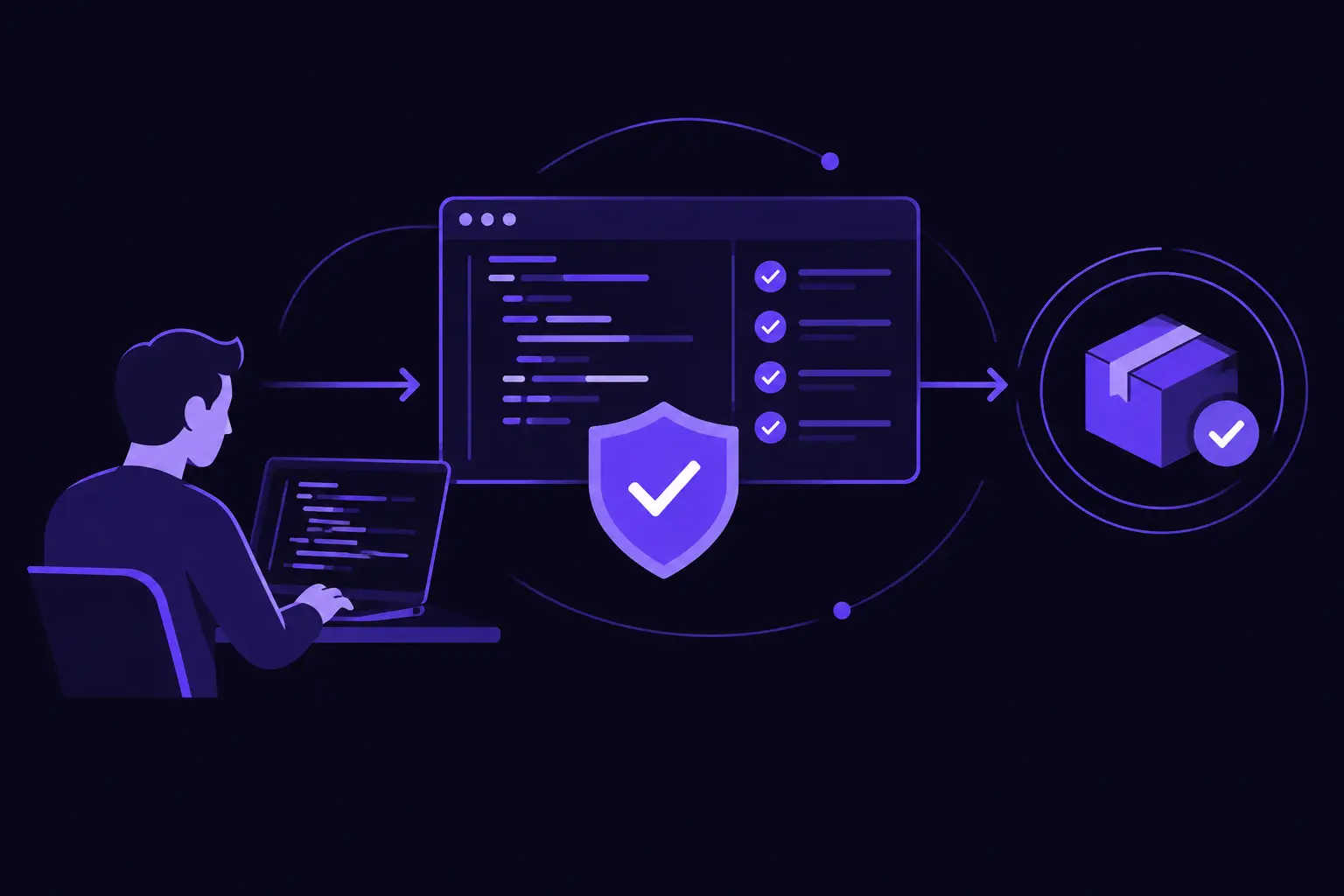
A project based development review is where a proposed build either becomes commercially controllable or reveals the assumptions that will later become change requests. For agencies, that distinction protects client trust and margin. For founders, it protects capital from being spent on an MVP that looks convincing in a demo but cannot support real users, data, or operational change.
The review should not be a ceremonial call followed by a vague estimate. It is the point where a delivery partner tests whether the requested outcome can be translated into a fixed scope, a fixed date, and an implementation plan that holds up under production conditions.
What a project based development review should establish
A credible review answers more than, “Can you build this?” Nearly any team can say yes to a landing page, dashboard, marketplace, or SaaS concept. The useful question is whether the team can define what will be built, what will not be built, how the system will behave, and what evidence proves it is ready for handover.
That requires agreement across commercial and technical boundaries. The client-facing team needs to know what can be promised. Engineering needs enough specificity to choose a data model, define API behavior, estimate integrations, and expose delivery risk before it enters the sprint plan.
For a creative agency, the review also confirms the operating model. Who owns communication? Will the engineering team remain invisible? What material can be shared under the agency brand? If confidentiality is not explicit at this stage, it becomes difficult to protect later. Your client should never have to manage an unknown subcontractor or wonder who owns the work.
For a founder, the equivalent question is ownership. At handover, do you receive the source repository, deployment configuration, database schema, and the right to continue development with any qualified team? A product build is an asset purchase, not a dependency arrangement.
Start with the business outcome, then constrain the build
Feature lists are rarely scopes. “User accounts,” “payments,” “admin panel,” and “notifications” each contain a set of decisions that affect cost and time. A project review turns broad requirements into testable behavior.
Consider an account system. Does it support email and password only, or social login? Are organizations required? Can users invite teammates? Are permissions role-based? Does an administrator need to suspend an account, reset access, or view activity history? The original line item has now become a meaningful portion of the application.
The same applies to integrations. A request to “connect Stripe” is not a defined requirement until the review establishes whether the product needs one-time payments, subscriptions, trials, invoices, refunds, taxes, webhooks, failed-payment handling, and internal reconciliation. The correct answer depends on the business model. It should not be guessed in a proposal.
A disciplined review identifies the primary user, the critical workflow, and the decisions that must be made before engineering begins. It then draws a boundary around version one. That boundary is not restrictive for its own sake. It is what allows a launch date to mean something.
Review architecture before visual polish hides the risk
A polished interface can conceal a weak system design. The project based development review should therefore examine the data and operational behavior early, particularly for SaaS products, internal tools, marketplaces, and platforms with user-generated records.
Relational questions matter. What is the source of truth for each record? Which entities belong to an organization rather than an individual user? What must remain historically accurate after a customer changes a plan, edits a profile, or removes a team member? Which actions require an audit trail?
These decisions influence the PostgreSQL schema, API contracts, authorization model, and future reporting capacity. They are not implementation details to postpone until after the frontend is approved.
For production work, the technical plan should define a strictly typed application boundary. In practice, that means frontend and backend contracts are intentional, payloads are validated, database changes are tracked, and application behavior does not depend on informal assumptions between developers. React and NestJS are useful tools in this model, but the standard matters more than the framework name.
The review should also separate necessary scale preparation from premature complexity. A founder with no active users usually does not need distributed infrastructure. That same founder may still need proper tenant isolation, secure authentication, a normalized database, and endpoints that can support a growing product. Build for the next real stage of success, not an imaginary enterprise scenario or a disposable prototype.
Test delivery risk, not just feature effort
Projects miss dates because of unresolved decisions as often as because of difficult code. A reliable review surfaces dependencies that sit outside engineering control: brand assets, final copy, access to third-party accounts, legal terms, data exports, stakeholder approvals, and client-side feedback cycles.
These are not minor administrative notes. If a payment provider account is not approved, a production payment flow cannot be verified. If product copy is still changing in the final week, interface acceptance may move with it. If a client provides a spreadsheet with inconsistent records, data migration can become a separate workstream.
The practical response is to assign responsibility and timing. Each external dependency needs an owner, a required-by date, and a fallback decision where possible. A fixed-date project can absorb normal engineering uncertainty. It cannot absorb unlimited indecision.
Testing also needs definition before the build begins. “QA included” is too loose. The review should state which workflows will be tested, which environments will exist, how defects are classified, and what qualifies as acceptance. Tested endpoints, form validation, authorization checks, responsive behavior, and critical-path user flows should be part of the delivery standard, not optional cleanup work at the end.
Define exclusions with the same care as deliverables
Commercial discipline is often mistaken for inflexibility. It is the opposite. Clear exclusions make it easier to approve a project because everyone knows what the fee and date cover.
A defined build may include an authenticated web application, an administrative interface, documented API endpoints, deployment support, and repository handover. It may exclude native mobile applications, ongoing content entry, custom branding beyond supplied designs, unplanned integrations, managed support after launch, or features requested after scope approval.
None of those exclusions mean the work cannot be added. They mean it should be estimated as a controlled change, with its own effect on budget and delivery date. This is especially valuable for agencies. The agency can protect its client relationship without quietly absorbing engineering work that was never sold.
A good review also distinguishes between a defect and a new requirement. If delivered behavior fails the approved specification, it should be corrected. If the specification changes after approval, the work should be evaluated as a change request. Without that distinction, a fixed-scope contract becomes open-ended staff augmentation under another name.
Make handover part of the build, not an afterthought
The final question in a project based development review is simple: what exactly will exist when the project closes?
Production software should not be handed over as a deployed URL and a promise that the vendor can help later. The receiving party needs practical control. That normally includes the full repository, source code, environment guidance, database migration history, deployment instructions, credentials transfer process, and relevant technical documentation.
For agencies, this makes the engagement easier to position under their own brand. The work is delivered confidentially, the agency retains client ownership and credit, and the technical asset can be maintained without exposing the behind-the-scenes engineering relationship. For founders, it means the code is theirs to operate, improve, fund, or transfer as the business evolves.
Repository ownership does not remove the value of a long-term engineering partner. It establishes the right kind of relationship: one based on continued delivery quality, not artificial lock-in.
The standard worth applying before approval
Before approving a project, ask whether a new engineer could read the scope and understand the expected user flows, technical boundaries, acceptance conditions, external dependencies, and handover package. If the answer is no, the project is not ready for a fixed price or a fixed date.
NovaStack uses this review discipline because production-grade work needs more than available developer hours. It needs a defined contract, a controlled implementation path, and a result that remains valuable after launch. The most useful project review does not merely make a proposal easier to sign. It gives everyone a clear basis for building software that can survive success.
Need this built for you?
Start a project